Wednesday, 25 February 2015

Playing the blame game with sex offenders

If we called rapists and pederasts losers instead of villains, would this be more of a deterrent?

‘Pirates don’t mind being called pirates.’ Johnny Depp in Pirates of the Caribbean. Photograph: Allstar

We all detest the rapists and pederasts, the disgraceful priests and choir masters, Jimmy Saville and the stinkers of Rotherham and Oxfordshire who maltreated schoolgirls – in fact the whole cohort of those who molest the naive or the vulnerable, especially the young, and not just those who are girls.
As things stand, some of those who rape or exploit vulnerable girls or boys are rightly despised, and only the odd psychologist thinks they may be unfortunate as well as vile. But what I can’t help wondering is whether the way most of us instinctively react – denouncing the rapists and pederasts as villains we see as fit to be whipped – may not necessarily be the deterrent we think it is.
Pirates don’t mind being called pirates: they run the Jolly Roger up the mast and boast about the numbers who have walked the plank. To put it simply, bad men don’t necessarily respond penitently to being called wicked, violent, disgusting. But suppose the approach was not “You bloody villain” but “Oh you poor, sad loser”: that might be a deterrent.
Apparently the Crime Survey of England and Wales found that teenagers were most likely to think rape victims were largely to blame. Is it possible they wanted, far more than their being denounced as a rogue or a villain, to exonerate sex offenders from the pathetic shame of being unable to turn anyone on?

Friday, 6 February 2015

Burglars jailed after series of Nantwich and Crewe break-ins

Two cousins have been jailed for 70 months for a series of break-ins across the country, including in Nantwich and Crewe.
Kindred crooks Scott and David Simkiss (pictured) teamed up to burgle several homes – but also went alone on some raids.


Wednesday, 26 November 2014

Thirteen men in Cheshire arrested as police target online paedophiles

Thirteen men were arrested across Cheshire today in a major operation targeting suspected online paedophiles.


Police targeted those believed to be involved in uploading and distributing indecent images of children on the internet.
The arrests were made between 6.30am and 8am after a police investigation and intelligence identified suspects in Crewe, Middlewich, Sandbach, Winsford, Chester and other towns.
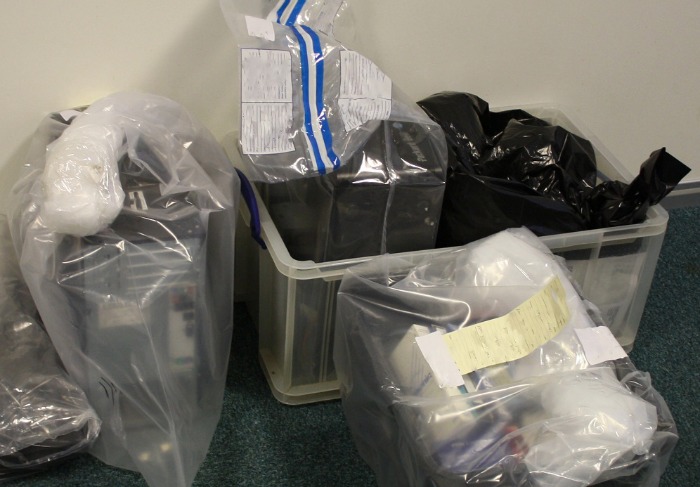
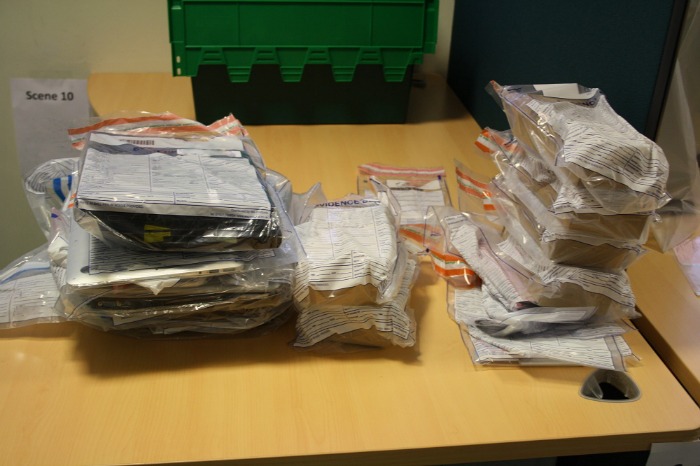
Officers also seized computers and other devices which have internet access.

Detective Superintendent Geraint Jones, who led the operation, said: “Cheshire Police take the issue of indecent images of children extremely seriously.
“We will do everything possible to bring offenders to justice.
“We have a dedicated Paedophile and Cybercrime Investigation Team who are fully committed to tackling this issue, with specialist officers who are trained to adapt to the constantly changing methods of online criminals.
“Behind every indecent image is an abused child and sharing such images online is illegal and results in further abuse.
“The operation has used the most up-to-date technology and intelligence to identify suspects, and this technology will continue to be used throughout the course of the investigations.”
The suspects are now being questioned by specialist officers from the team.
Cheshire Police would like to remind the public that they can report any online illegal activity by calling 101 or anonymously to Crimestoppers on 0800 555 111.
A full list of those arrested include:
A 67-year old man from Crewe
A 24-year old man from Sandbach
A 63-year old man from Middlewich
Four men aged 51, 42, 29 and 20 from Chester
Two men aged 46 and 40 from Winsford
A 68-year old man from Knutsford
A 43-year old man from Widnes
Two men aged 46 and 36 Ellesmere Port

Tuesday, 28 October 2014

The Observer view on the release of ‘cop killer’ Harry Roberts

The clamour to keep Harry Roberts, 78, in jail is wrong-headed
The Parole Board for England and Wales has said Harry Roberts, who killed two police officers in London in 1966, can be released. Photograph: PA

The imminent release of Harry Roberts, jailed in 1966 for shooting dead two police officers in cold blood, has prompted widespread revulsion. For the families of the slain men it has dragged up painful memories. For police officers, it has served as a reminder of the ultimate price that some of them pay. And for politicians it has provided a platform to express outrage. The home secretary, Theresa May, has repeated her pledge to introduce a law that ensures “cop killers” die in jail.
Sentencing him to a minimum of 30 years, the judge, Mr Justice Glyn-Jones, said Roberts had committed the “most heinous crime for a generation or more”. The additional 18 years that Roberts has served reflects the lack of remorse he has shown for his actions.
But this is not to say he should never be released. A prison sentence is as much about rehabilitation as it is about punishment. To suggest that the murderers of police officers are somehow different from terrorists or others who have taken lives is illogical.
It would also undermine the parole board for England and Wales, the independent body that assesses when prisoners can be released. It is hard to see how a criminal justice system can function without such a body. Some will argue that the killers of police officers should be made examples of, in order to send a clear message to society. But where to draw the line? Is the life of a policeman worth more than that, say, of a prison officer?
Ultimately, as the former Met commissioner, Lord Condon, has argued, a mandatory whole life sentence will put police officers at greater risk. Someone who has killed one policeman knows that they will spend the rest of their lives in jail. Put bluntly, they have nothing left to lose by going on a killing spree. And that makes them more dangerous to police officers. The parole board has decided Roberts, 78, is no longer dangerous. Let him out.
Source; http://www.theguardian.com/commentisfree/2014

Tuesday, 14 October 2014

New Psychoactive Substances

New Psychoactive Substances have featured in the news and conversations a lot recently with young people and professionals alike. These substances have many different names, from ‘legal highs’ to ‘designer drugs’ or ‘research chemicals’. The labels and nicknames of the drugs change weekly and it is often difficult to keep up but the impact is still the same.
I want to discuss the individuals behind the drugs and the situations that lead them to putting themselves at risk by taking these substances. Drug taking is often, but not always, a result of a person trying to escape or cope with a situation or event. I want to understand why young people are turning to these new substances and so later this week I will be speaking to young people who have experienced legal highs to get their perspective.
Some of these young people may have been affected by crime previously; some may be forced into trying new substances, others may have done it out of curiosity.  These young people are hidden victims of crime that may need an outside perspective from someone who can give them some advice.
I am speaking to officers, young people and professionals so that I can understand the issue better and work with all these groups to see how we can reduce the risk of harm that come with these unknown substances.
Advice around the subject from exchangesupplies.org are:
1.   Know the Law – You may still be arrested if you are found with a legal high.
2.   Don’t trust suppliers – What you buy is not always what they say it is.
3.   Understand the Risks – Legal highs are just as dangerous as illegal drugs.
4.   Do your research – find out all you can before using a legal high.
5.   Don’t be a ‘drug pig’ – “you can always take more – but you can never take less”
6.   Avoid heatstroke – Stay cool when using stimulants – know what to do in an emergency.
7.   Don’t use alone – It is safer to have someone with you.
8.   A pinch is enough – A pinch of synthetic cannabis the size of a match head is an active dose.
9.   Look after your mates – In the same way you would want them to look after you.
10.    Ask for help – There are always people who can help you.

Thursday, 9 October 2014

Have police decisions delayed catching the killer of Alice Gross?

‘The yellow ribbons are a lasting symbol of a collective hope … 
But the luxury of hope is not one that an experienced
 detective can have in their armoury.’ Photograph: Laura Lean/PA

The yellow ribbons spread across west London are a lasting symbol of a collective hope that Alice Gross would be found alive and well. Though it diminished as weeks passed with no sign of the 14-year-old girl, that hope united the human spirit. But the luxury of hope is not one that an experienced detective can have in their armoury.
As the international manhunt intensifies for Arnis Zalkalns, the 41-year-old Latvian man with a previous murder conviction who is the prime suspect in the killing, there are parallel reviews into the handling of the Metropolitan police’s investigation into the teenager’s disappearance on 28 August this year.
Reviews of investigations are not unusual, but in this case an additional review is being carried out by the Metropolitan police, focusing on the early days of the inquiry, after Alice was reported missing by her family and the family of Zalkalns had also reported him missing.
This raises questions about whether enough consideration was given to the possibility that Alice might have been abducted or murdered from day one, and what connections were or were not made with the disappearance of a man who had a conviction for murdering his wife in Latvia and who was also arrested in London in 2009 for an indecent assault.
Britain’s murder conviction rate is high, but there are lessons to be learned from particular cases of missing persons investigations which become homicide inquiries.
Cases such as those of Gracia Morton, Carole Waugh and Tia Sharpe suggest that the sooner a missing person’s inquiry is upgraded to a potential homicide the more likely it will be to gather the evidence needed to bring a perpetrator to justice.
In the case of Morton, a mother who went missing in 1997, the pursuit of a missing person’s investigation for more than a year meant the man who was eventually convicted of killing her was treated for too long as a witness, his houses were not thoroughly searched and he was able to hide her body so well it has never been found.
Similarly when Waugh went missing in 2012, her disappearance was treated as a missing person’s inquiry for more than three months. When murder detectives took over the case and searched her bank accounts it emerged she was the victim of a predator who had killed her.
More recently there was critical learning from the Sharpe case, in which the mindset of the inquiry seemed for too long to be caught up in the belief or hope that she was still alive.
The 12-year-old girl’s disappearance in August 2012 was passed to homicide detectives three days after she went missing, but the inquiry seemed to focus on hunting for a living girl, not a victim of homicide. Crucial evidence was not seized, the suspect was not arrested and it was only after four searches of the small property that Tia’s body was discovered in the loft.
It is the experience gathered by investigators on all of these cases which should have been on the minds of officers from the very early days of the Alice Gross investigation.
Senior investigating officers within the homicide command at the Met police have been briefed on the learning from the Sharpe case, and from other cases, including Waugh and Morton. These lessons included the need to seriously consider elevating a disappearance which is entirely out of character to a potential homicide within hours, not days. As well as the need to secure evidence quickly, detectives are given a raft of added powers – for instance to examine phones – once they begin a murder investigation.
In the early days of the Alice Gross investigation it was run by missing persons officers from the local borough – with homicide officers advising – and seemed to focus on the hope that Alice was a teenager who might have taken herself off for a while, but would soon be home.
Six days in, the inquiry was handed to homicide detectives whose early appeals also centred on a plea for her to return to her family.
It was not until 16 September – 13 days after Zalkalns was reported missing by his partner – that the Metropolitan police put out a public appeal to find him. There has been criticism that they did not issue an Interpol blue notice – which alerts international law enforcement agencies – soon enough, and that all the appeals were issued in English, and not in Latvian.
The force has said it has been unable to issue a European arrest warrant because they did not have the evidence required to seek one.
In all likelihood Alice died not long after encountering her murderer. Nothing the police could have done is likely to have saved her life, but only time will tell whether their investigative decisions have delayed bringing her killer to justice.
• The comments on this article are being pre-moderated for reasons of sensitivity
Source; http://www.theguardian.com/commentisfree/2014/oct/02/police-decisions-killer-alice-gross-met-inquiry

Wednesday, 8 October 2014

Intruder Alarm Engineer Required

Do you reside within a 30 mile radius of Sandbach, Cheshire?

Benefits; £20-24k + On Call Allowance +Bonuses + Company Vehicle. We are a NACOSS GOLD Company. Work will consist of planned and corrective maintenance and the installation of electronic security systems. Primarily Intruder Alarms. However, experience of installing and maintaining other security systems would be a bonus (Fire Alarms, CCTV and/or Access Control). Applicants must have at least 5 years relevant experience in one or all of the above disciplines and a proven track record in the security industry. All engineers will be required to carry out on-call duties on a roster basis (1 in 3). TO APPLY PLEASE CALL 01270 879593

or send your CV to; andrew.vickers@crimewatch-security.co.uk

Deadline Date: 2014/12/31

Salary: £20,000 - £24,000